
How to Search Major County Court Records
Major County court records are searched through two free statewide systems and, when a file is not online, directly through the Court Clerk. The On Demand Court Records site, known as ODCR, is the first stop because the Major County Court Clerk links to it from the county website. The Oklahoma State Courts Network, or OSCN, is the judiciary's own system and carries Major County District Court cases along with appellate dockets. Both let you search by name or case number at no charge for docket information. Scanned document images and a few advanced filters cost money, but the case index itself stays open to anyone.
A search goes faster with a few details in hand. The most useful is the case number, which follows a prefix, year, and sequence pattern such as CF-2014-1 for a felony or FD-2019-00024 for a divorce. If you only have a name, enter it as last name first. Knowing the rough filing year and the type of case, whether criminal, family, probate, small claims, or traffic, helps narrow a common name.
- Start with ODCR, since the Major County Court Clerk page links to it directly.
- Choose Oklahoma District Courts or All Courts, then pick Major from the Court dropdown to narrow to the county.
- Enter a party name as Last, First, or search by case number if you already know it.
- Add a case type only when you know whether the matter is criminal, family, probate, small claims, traffic, or another category.
- Read the case header before relying on a result, and confirm the county, case type, filing date, and parties.
- For a certified copy or a file that is not online, call the Court Clerk at 580-227-4690 or visit Suite 5 during posted hours.
The ODCR landing page at On Demand Court Records opens directly into a public search for every participating Oklahoma court.
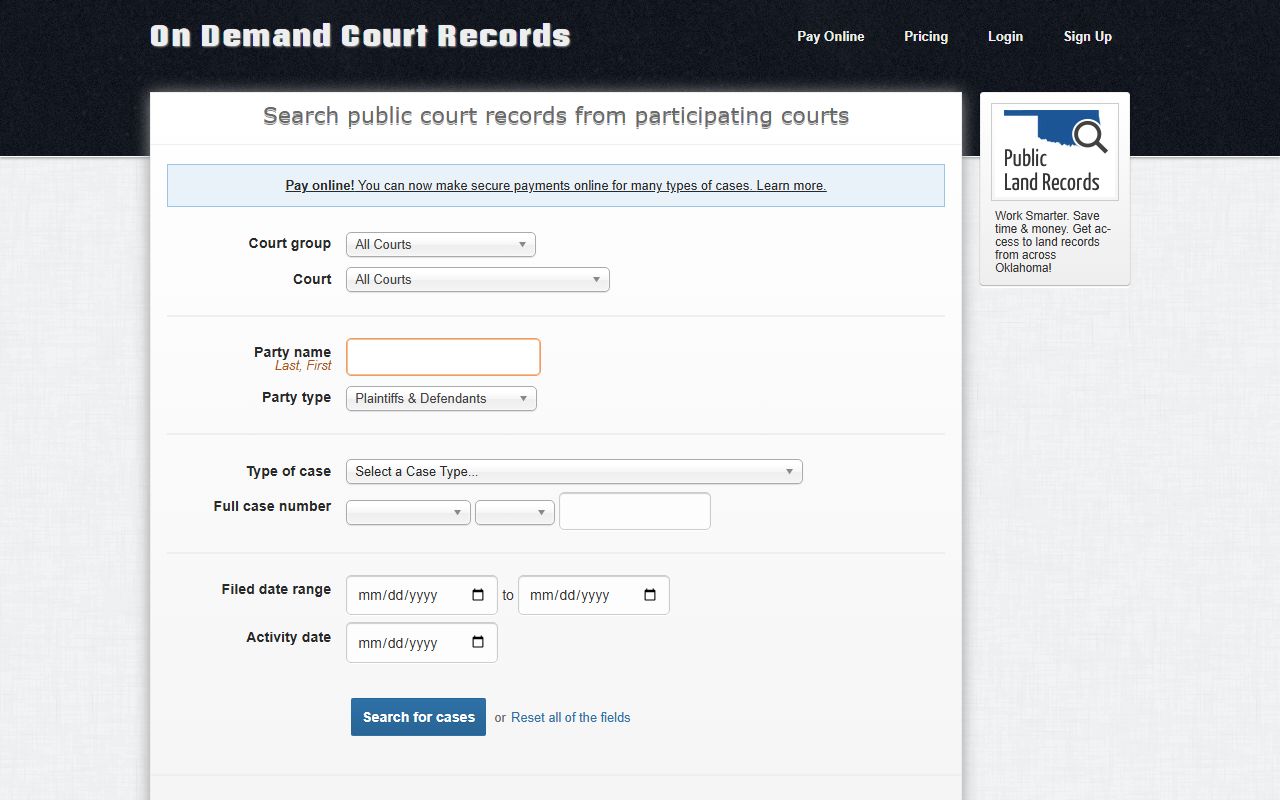
From here a Major County court records search runs against live District Court dockets with no login and no fee for the case index.
Major County Court Records Search Fields
The ODCR search form keeps the fields simple, and none of them are mandatory on their own. The system asks only that you supply enough information to identify a case; if you enter too little, it returns a notice that more search detail is needed. The Court group and Court dropdowns narrow the search to Major County District Court, the Party name field accepts a Last, First entry, and the Type of case dropdown lets you filter by category when you know it.
| Field Label | Type | Required | Notes / Format |
|---|---|---|---|
| Court group | Dropdown | No | All Courts; Oklahoma District Courts; Tribal Courts. |
| Court | Dropdown | No | All Courts; includes Major, the Oklahoma Appellate Court, other county courts, and several tribal courts. |
| Party name | Text | No | Format shown as Last, First. |
| Party type | Dropdown | No | Plaintiffs and Defendants; All Parties. |
| Type of case | Dropdown | No | Civil over $10,000; civil under $10,000; criminal felony; criminal misdemeanor; family and domestic; guardianships; probate; small claims under $6,000; traffic tickets; and more. |
Free searching covers the docket, but deeper tools carry a price, as the ODCR pricing and access page spells out.
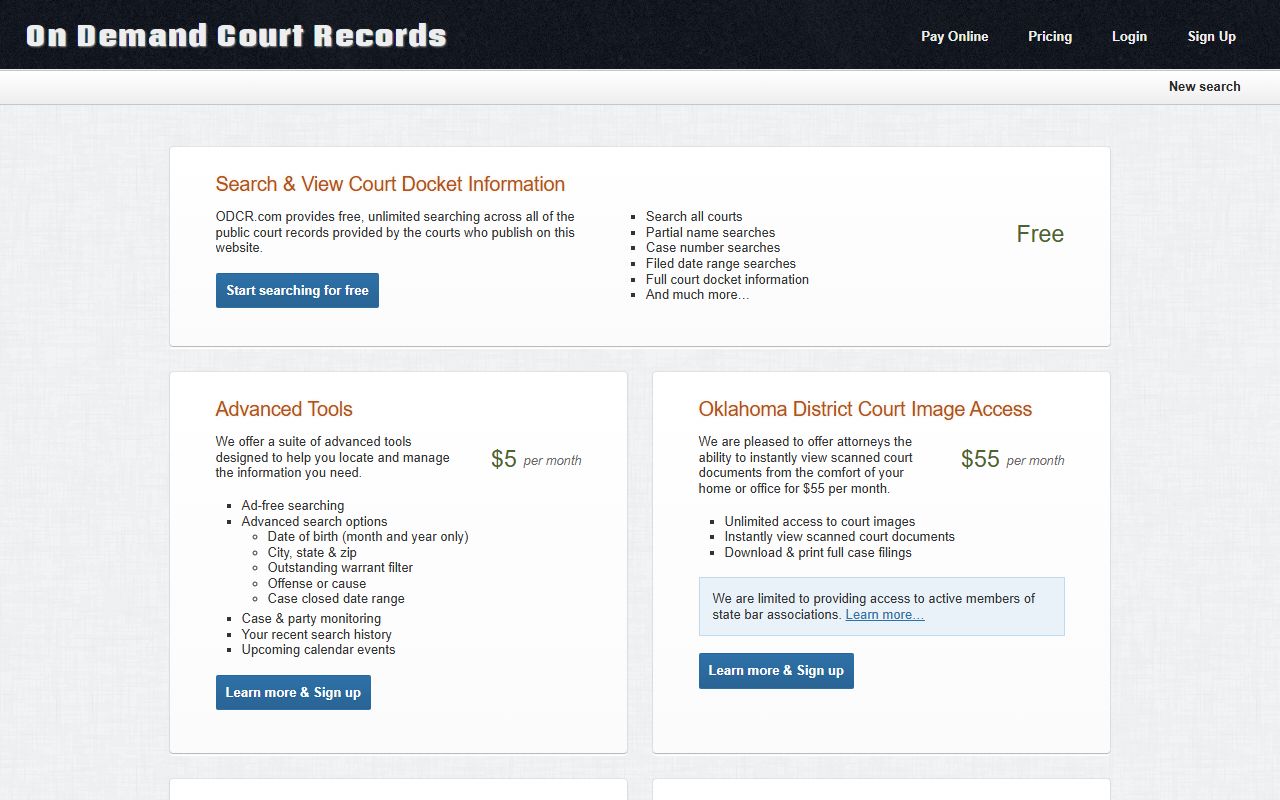
Partial-name, case-number, and filed-date searches are free, while extras such as a date-of-birth filter, an outstanding-warrant filter, and case monitoring sit behind a low monthly plan, and scanned district-court images run higher and are limited mostly to bar members.
OSCN and E-Payment Access for Major County Court Records
The Oklahoma State Courts Network is the judiciary's official record system. Its Case Number Lookup includes a County or Court dropdown that lists Major County District Court alongside most other Oklahoma district courts and the appellate courts. You can open a docket search, jump straight to a case number such as CF-2014-1, or use the link for non-OSCN counties, which points back to ODCR. OSCN also publishes District Court Reports, including daily dockets by judge, by case type, and by event, plus daily filings by county. Those daily lists feed the Major County court dockets that the clerk and judges work from each morning.
Court costs, fines, and some restitution can be paid online when a case is approved for card payment. The OSCN e-payments system accepts a case number, a citation number, or a payment-plan number for selected Major County District Court matters. A traffic citation may use a different number format than a filed case, so the e-payments page warns that municipal and sheriff citations are not always the same as court case numbers. Paying online settles a balance; it does not replace a certified copy.
The state's overview of how trial courts work sits on the Oklahoma.gov District Courts page, which explains that district judges hear both civil and criminal matters.
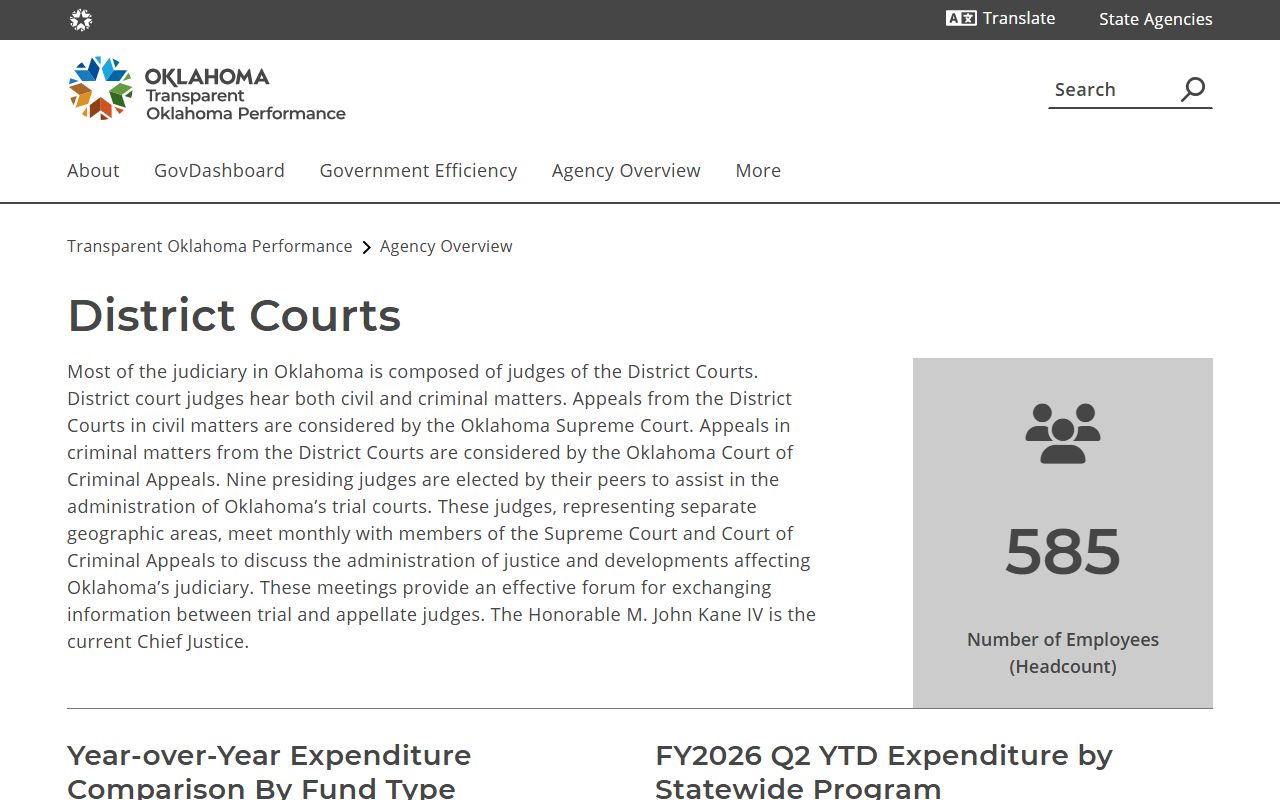
That single venue is why nearly every Major County court record, civil or criminal, traces back to the District Court rather than a patchwork of separate courts.
Types of Major County Court Records
The District Court is a general-jurisdiction trial court, so a single county office holds a wide range of case types. ODCR and OSCN sort them by category, and the same prefixes show up in the case numbers. Most public searches return one of a handful of record families.
Criminal files open once charges are filed, not when an arrest happens. The Sheriff's Office keeps the booking side, the District Attorney files the charges, and the Court Clerk keeps the resulting case. Civil, family, probate, and small-claims files follow the same path into the District Court. Traffic tickets filed at the state-court level appear here too, though a municipal citation may route through a city court instead.
- Civil cases: lawsuits, money-damages claims, injunctions, judgments, liens, and garnishments.
- Criminal cases: felony and misdemeanor proceedings, probable-cause filings, drug court, and youthful offender matters.
- Family and domestic: divorce, dissolution, custody, support, and protective orders.
- Probate: estates, guardianships, conservatorships, trusts, and the filing of wills.
- Small claims: disputes under the statutory dollar limit, handled on a faster track.
- Traffic: citations filed with the District Court, some payable through the state e-payments system.
- Restricted matters: juvenile, sealed, and expunged records kept off the public internet.
Traffic cases carry their own quirks around citation numbers and driver records, which the Major County traffic court records cover in more detail.
What Major County Court Records Show
A search result is built from a standard set of fields, whether the case is criminal or civil. The header names the court and the parties, and the docket below it logs every filing and hearing in order. A real Major County example, BOECKMAN versus BOECKMAN under case number FD-2019-00024, shows a dissolution of marriage filed in 2019 before Associate District Judge Timothy Haworth, with a plaintiff, a defendant, no listed attorneys, and an events section. The table below lists what each field reports.
| Field | What It Shows |
|---|---|
| Case Number | Prefix, year, and sequence, such as CF-2014-1 for a felony or FD-2019-00024 for a divorce. |
| Filing Date | The date the case was opened with the Court Clerk. |
| Case Type | Criminal felony, misdemeanor, family and domestic, probate, small claims, traffic, or civil. |
| Parties | Plaintiff and defendant, petitioner and respondent, or the State and a defendant. |
| Judge | The assigned district or associate district judge, such as Justin Eilers or Timothy Haworth. |
| Attorneys | Counsel of record for each party, or None when no attorney is listed. |
| Events / Docket | Filings, motions, hearings, orders, warrants, payments, and the final disposition. |
| Charges | For criminal cases, the offense, statute, count, bond, plea, and sentence. |
| Disposition | The outcome of each charge or the case, such as dismissed, convicted, or judgment entered. |
| Documents | Public docket text is free; scanned images can be paid or restricted. |
Public Access Framework for Major County Court Records
Oklahoma treats court records as public records under the Open Records Act, found at 51 O.S. Section 24A.1 and following. The law requires public bodies to provide access to records unless a specific exception applies, and it is indexed on the state's Open Records Act page. Anyone may search a docket. You do not need to give a reason or show standing to look up a Major County court record.
Access online and access at the counter are not the same thing. Court of Criminal Appeals Rule 2.6 lets the clerk keep certain materials available in person while withholding them from the internet, including juvenile files, juror information, and records the Legislature has made confidential. A free online docket is also not a certified record. For anything used in a legal proceeding, the Court Clerk verifies the file and issues a certified copy for a fee set by the office.
The full statute text lives in the Official Oklahoma Statutes browser for Title 51.
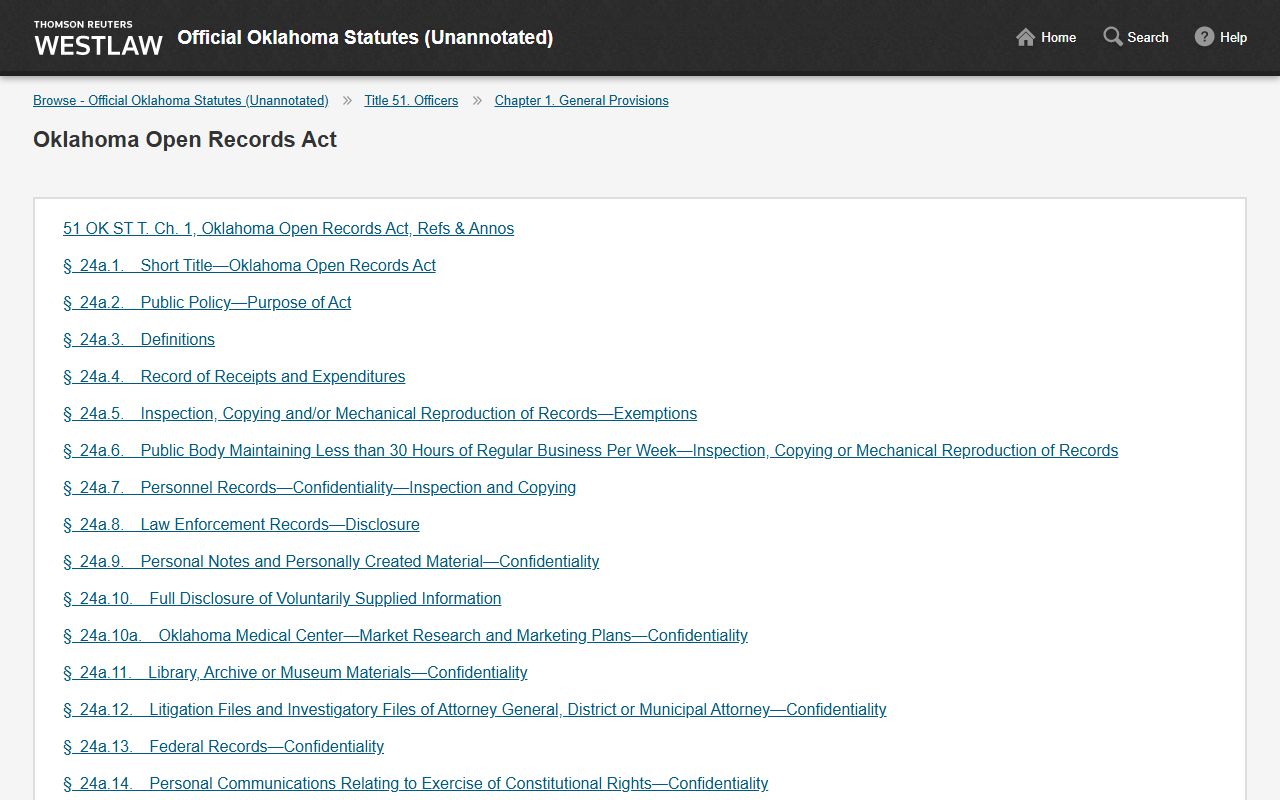
Reading the Open Records Act directly shows why most Major County court records are public while a narrow set of categories stays closed.
Note: Online dockets are convenient but uncertified, so confirm a Major County court record with the Court Clerk before relying on it for any legal purpose.
Records That Are Sealed or Confidential in Major County
Some Major County court records are closed by law. Oklahoma's juvenile statutes make juvenile court files, agency records, district-attorney juvenile records, law-enforcement juvenile records, and related social and education records confidential. These do not appear on the public docket and usually require a statutory role or a court order to view.
Sealing and expungement are separate from confidentiality and are tightly defined by statute. Eligibility runs through 22 O.S. Section 18, which lists who may ask a court to expunge a criminal record, available in the Official Oklahoma Statutes. The State Bureau of Investigation does not pre-approve eligibility and points applicants to that section. A dismissed charge does not vanish on its own; removing public access takes a court order.
To pursue an expungement, start by pinning down the exact case number in ODCR, OSCN, or through the Court Clerk. Compare the outcome with the Section 18 categories, then file a petition in the proper court and serve the agencies that hold the record, such as the OSBI. If the judge grants the order, it must reach each agency so the docket, the criminal-history file, and related records are updated. Filing and copy fees are set locally, so confirm them with the Court Clerk.
Oklahoma explains why juvenile files stay private on the Office of Juvenile Affairs FAQ, which cites the confidentiality provisions of Title 10A.
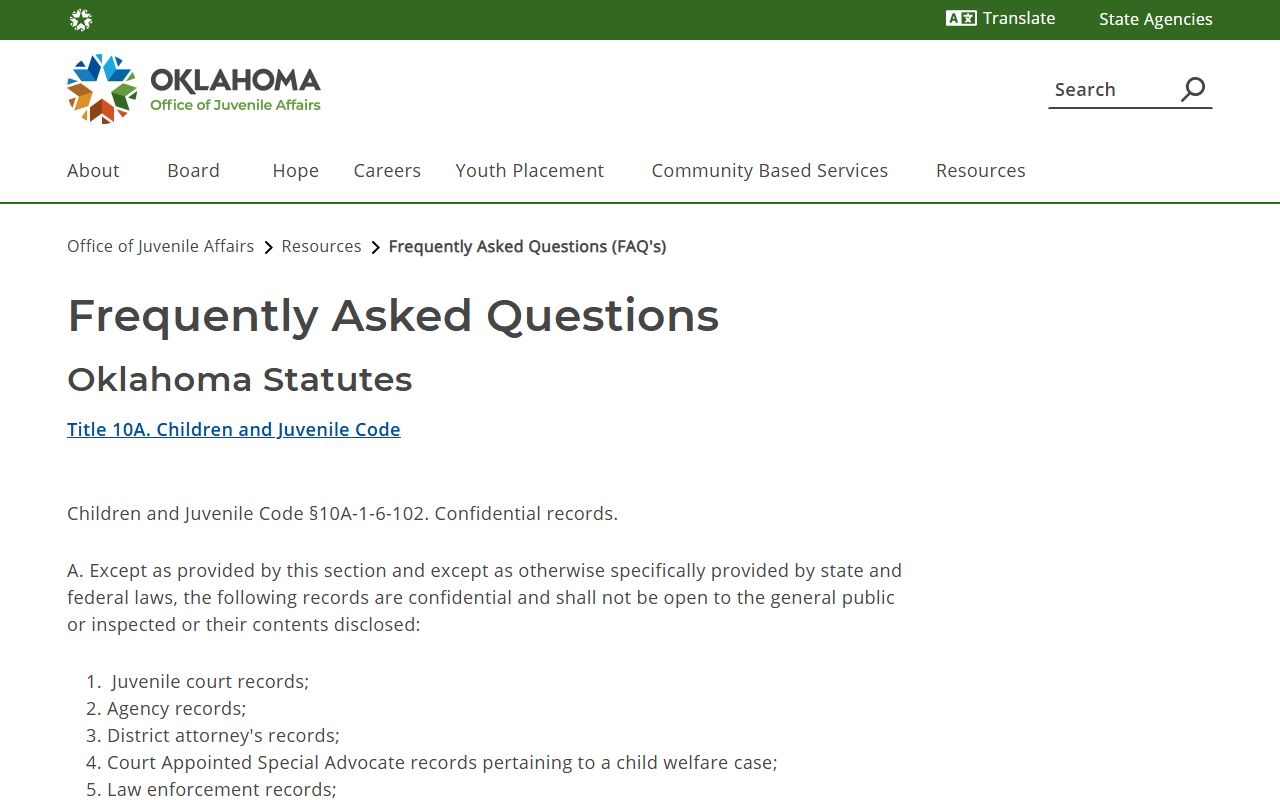
Those rules are the reason a Major County court records search will never return a juvenile case the way it returns an adult felony or a divorce.
In-Person Court Record Requests
When a file is old, image-restricted, or needed in certified form, the Major County Court Clerk handles it in person. The office sits in the courthouse in Fairview and maintains the District Court's records, files, and proceedings, issues certified copies, collects court fees, and issues marriage licenses. Bring the case number if you have it, or enough names and dates to identify the file, and confirm current fees before you go, since the office does not post a copy-fee schedule online.
Major County Court Clerk
500 E. Broadway, Suite 5
Fairview, OK 73737
580-227-4690
Hours 8:30 to 4:30
Important: Certified copies are required for legal proceedings; the free copies printed from ODCR or OSCN are not accepted as official court records.